

America’s newest jail has no walls
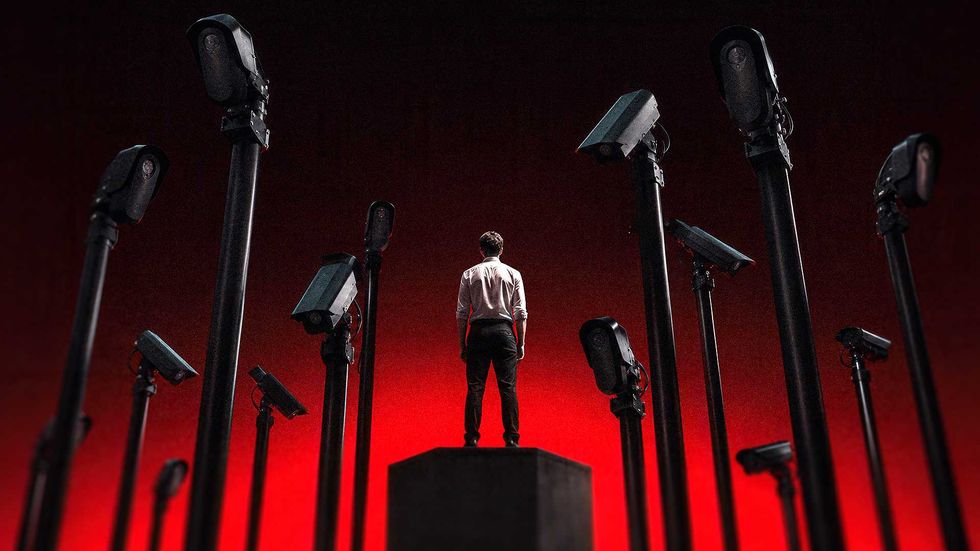
Americans are looking for safety in an increasingly chaotic country. Mass immigration, collapsing social trust, and weakening civic bonds have transformed many communities from places where neighbors knew one another into anonymous zones governed by suspicion. Technology promises an escape from the consequences of those political and cultural failures. Flock Safety cameras appear to offer law and order at the push of a button. In the hands of the ruling class that manufactured the crisis, however, they are more likely to produce tyranny for citizens. Today’s stolen-car database can become tomorrow’s political enforcement system. Municipalities are buying Flock’s automated license plate readers. The company did not invent plate cameras, but its artificial intelligence radically expands their reach. Flock cameras photograph passing vehicles and record license plates, makes, colors, damage, bumper stickers, and identifiers. A single camera means little. A citywide network collecting thousands of images every day creates something powerful . The cameras send their information to an AI database in real time. Police and other municipal employees can search for vehicles nearby. They can place cars on “hot lists” and receive alerts whenever those vehicles appear. The system effectively places a GPS tracker on every moving car. Police ordinarily need a warrant to attach a tracker to your vehicle. Flock can reproduce the same surveillance through a network of cameras, often without probable cause, due process, or meaningful legal restraint. The benefits are obvious. Perfect information about every vehicle makes suspects easier to find. Police can recover stolen cars, locate fleeing murderers, and respond faster to crimes. In a high-trust town, every grandmother on the porch once knew which cars belonged and which did not. Flock offers a technological imitation of that lost social awareness. But imitation carries a price. Grandma knew her neighbors and exercised human judgment. The database knows everyone and answers to government employees. Flock is not alone in selling technological substitutes for social order. Cities have used gunshot-detection systems . Networks of acoustic sensors identify gunfire and triangulate its location, allowing police to respond faster. The engineering may be impressive. The governing theory is primitive: If authorities watch and listen to everyone constantly, they can prevent more crimes and solve more cases. RELATED: We’re winning the fight against Flock — but the surveillance isn’t going away that easily Andrii Yalanskyi/iStock/Getty Images A surveillance panopticon may work. People who know they are always being watched behave differently. Americans have resisted that bargain for good reason. The Fourth Amendment exists because efficient policing is not the highest political good. Government must possess evidence and follow procedures before invading the privacy of citizens. New technology should not erase old constitutional limits. Britain offers a warning. Closed-circuit television cameras have become ubiquitous across the United Kingdom. Some estimates suggest that the average British resident appears on camera dozens of times each day. Britain has no written equivalent of the Fourth Amendment, and its political culture places fewer obstacles before constant public surveillance. Yet cameras did not prevent the Rotherham grooming-gang scandal or protect thousands of vulnerable girls from organized abuse. Officials ignored or concealed the crimes for years because confronting them threatened the ruling class’s multicultural ideology. When public anger finally erupted, the surveillance state proved far more competent at identifying and punishing citizens who protested the cover-up. That is the anarcho-tyranny trap. Conservative thinker Samuel Francis used the term to describe a regime that tolerates disorder while imposing suffocating control on peaceful citizens. Authorities fail to punish criminals, then use the chaos created by that failure to justify new powers over everyone else. Americans have already seen the pattern. The government possessed enormous amounts of video from the Black Lives Matter riots of 2020. Businesses burned, neighborhoods were looted, and citizens were assaulted. The system showed little appetite for using every available image to identify and prosecute everyone involved. After January 6, the same government used surveillance footage, facial recognition, financial records, and digital communications to pursue participants with extraordinary intensity. Officials punished many who entered the Capitol and investigated people who merely stood nearby. RELATED: Flock Safety CEO: It’s ‘terroristic’ to want to know where we put our spy cameras Antranik Tavitian/Bloomberg/Getty Images During the pandemic, technology companies yielded to government pressure, censored disfavored speech, and turned over user information. Neither the administrative state nor its corporate partners have earned the benefit of the doubt. They have repeatedly demonstrated that enforcement depends on the target. I am less hostile to state power than many conservatives. A government that cannot control its borders, remove violent criminals, or maintain public order is not a serious government. But power must be directed toward the common good. The officials asking for universal surveillance are the same officials who refuse to use ordinary authority against illegal immigration, organized crime, urban disorder, and politically favored mobs. Giving them a database that tracks every American driver will not correct their priorities. It will magnify them. Supporters will insist that only criminals need to worry. That argument assumes surveillance will remain limited to serious crime and that government will apply its powers impartially. Recent history destroys both assumptions. Today’s stolen-car database can become tomorrow’s political enforcement system. A hot list can identify a murder suspect, an immigration protester, a gun owner, a church attendee, or anyone traveling to a disfavored rally. The danger does not require a secret conspiracy. Bureaucracies naturally expand their missions. Politicians redefine threats. Private vendors seek new contracts. Once the infrastructure exists, every crisis supplies another justification for using it. America’s disorder has obvious political causes. Elites imported cheap labor, weakened borders, excused criminality, and dissolved the social bonds that once allowed communities to police themselves informally. Citizens now feel like strangers in their own homeland. Technology cannot repair that betrayal. The difficult answers remain immigration restriction, deportation, competent policing, equal enforcement, and the restoration of families, neighborhoods, and civic trust. Cameras may assist legitimate police work, but they cannot substitute for political courage. Flock promises safety without social repair. The bargain is tempting because rebuilding order is difficult. Americans should refuse it. Rewarding the people who created the crisis with the power to monitor every movement will not restore a high-trust society. It will lock law-abiding citizens inside an open-air prison while the disorder continues beyond the cameras’ reach.
This is a summary. Read the full article at the original source.
Read full article at theblaze