

Confusion persists over tinted glass permit
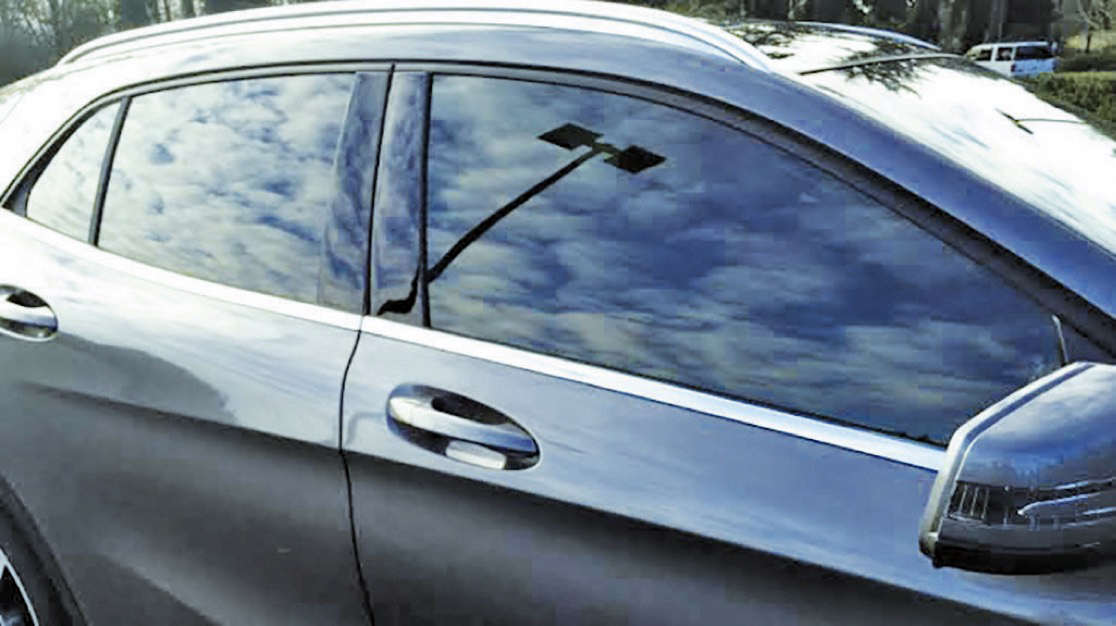
For thousands of Nigerian motorists, a routine drive has become an exercise in uncertainty. At police checkpoints across the country, many drivers claim they are being stopped and questioned over tinted windows. While some alleged that they are asked to produce tinted glass permits, others are reportedly ordered to remove factory-fitted tinted glass or risk having their vehicles impounded. In some cases, motorists allege they have been intimidated, delayed or pressured to pay money to avoid further trouble. The post Confusion persists over tinted glass permit appeared first on The Sun Nigeria .
ν Motorists outraged as police resume enforcement despite court order ν ‘Police focusing on symptoms, ignoring real security issues’ By Olakunle Olafioye, Obinna Odogwu, Lukman Fabiyi, Tony John and Scholastica Hir F or thousands of Nigerian motorists, a routine drive has become an exercise in uncertainty. At police checkpoints across the country, many drivers claim they are being stopped and questioned over tinted windows. While some alleged that they are asked to produce tinted glass permits, others are reportedly ordered to remove factory-fitted tinted glass or risk having their vehicles impounded. In some cases, motorists allege they have been intimidated, delayed or pressured to pay money to avoid further trouble. Recently, in a widely circulated viral video, a motorist travelling along Owerri Road was stopped by a police officer and ordered to remove the tinted film from his vehicle. The driver, who was obviously shocked at such ridiculous request, explained that he had obtained a valid tinted glass permit through the prescribed procedure at the Anambra State Police Command Headquarters in Awka. He further stated that he had fulfilled all the legal requirements, including presenting the medical report required for the issuance of the permit. Inspector General of Police Tunji Disu Questioning the basis for the officer’s directive, the motorist said: “If I have a valid permit issued after complying with all the necessary requirements, why am I being asked to peel off the tint? Who decided that a permit holder must still remove the tinted glass? Wasn’t the permit issued by the police themselves? “If the permit is no longer recognised, why was it issued in the first place? And what was the purpose of the money collected from me during the application process? “I have complied with all the requirements and possess every document required by law. I am simply asking for an explanation as to why I am still being ordered to remove my tinted glass despite holding a valid permit,” the visibly bewildered motorist queried. Yet, the legal status of the enforcement itself remains the subject of court proceedings. The contradiction has created one of the most confusing law enforcement controversies in recent years—a situation in which a policy announced by the Nigeria Police Force (NPF), challenged in court by the Nigerian Bar Association (NBA), and temporarily halted by judicial orders, continues to generate uncertainty on Nigerian roads. The result is a classic contest between the rule of law and the exercise of state power, with ordinary citizens bearing the consequences. A policy that sparked controversy The controversy began in April 2025 when the then Inspector-General of Police, Kayode Egbetokun, announced the reintroduction of a digitised tinted glass permit system. Under the arrangement, motorists whose vehicles had factory-fitted tinted windows would be required to apply annually for permits through the Police Specialised Services Automation Project (POSSAP) portal. The police justified the policy on security grounds. According to the Force, criminals increasingly exploit heavily tinted vehicles to perpetrate kidnapping, armed robbery, including “one chance” and other violent crimes because the windows prevent security personnel from identifying occupants. Police authorities argued that modern vehicles increasingly come with factory-installed privacy glass, making it necessary to establish a standardised process for identifying legitimate users while preventing abuse by criminals. Initially, enforcement was scheduled to begin on June 1, 2025. However, widespread public criticism, reports of harassment, fears of extortion and legal challenges forced the police to postpone implementation. Judicial intervention Before enforcement could fully commence, the controversy over the policy landed before the courts. The Nigerian Bar Association, through its Section on Public Interest and Development Law (NBA-SPIDEL), filed an action before the Federal High Court in Abuja, questioning the legality of the policy. Separately, human rights lawyer John Aikpokpo-Martins instituted another suit before the Federal High Court sitting in Warri. The plaintiffs argued that the Nigeria Police lacked constitutional or statutory authority to impose fresh financial obligations on citizens through administrative directives. They also questioned the legality of compelling Nigerians to obtain annual permits for factory-fitted tinted glass supplied by vehicle manufacturers. More importantly, the plaintiffs raised concerns over the destination of the fees collected under the scheme, alleging that payments were being made into the account of a private company rather than the Federation Account or the Treasury Single Account. The NBA described the policy as unconstitutional, illegal, extortionate and inconsistent with citizens’ constitutional rights, including the rights to privacy, dignity, freedom of movement and ownership of property. On October 3, 2025, the Federal High Court in Warri directed all parties to maintain the status quo, effectively restraining the police from enforcing the policy pending the hearing of an interlocutory application. The court order immediately changed the legal landscape. Suspension that brought temporary relief Following the court order and mounting public outrage, a high-level meeting involving the Inspector-General of Police, senior members of the Police Management Team, legal representatives of the police and officials of the Nigerian Bar Association was convened. At the meeting, both sides reportedly agreed that enforcement of the policy would remain suspended pending the determination of the cases before the courts. When the matter later came before the Federal High Court in Abuja, counsel representing the police informed the court of the agreement to suspend enforcement. Relying on that undertaking, the court struck out the pending motion for interlocutory injunction. Many Nigerians believed the controversy had effectively been laid to rest pending final judgment. Fresh enforcement rekindles controversy Days after the court proceedings, the former Force Public Relations Officer, Benjamin Hundeyin, announced that enforcement of the tinted glass permit policy would commence on January 2, 2026. The announcement reignited public outrage with the NBA accusing the police of reneging on the undertaking made before the court and warned that the planned enforcement amounted to contempt of court. The association maintained that the police could not lawfully reactivate enforcement while the substantive suits challenging the legality of the policy remained pending. It further threatened committal proceedings against the Inspector-General of Police and other officials should the enforcement continue in defiance of judicial proceedings. This threat would later force the police to pause its enforcement until the recent weeks. For many legal observers, the disagreement raised profound constitutional questions about obedience to court orders and respect for the rule of law. Uproar, confusion over renewed enforcement But while lawyers continue their arguments in courtrooms there are fresh indications that the police might have surreptitiously re-commenced the enforcement of the suspended policy. In the recent weeks, different accounts of alleged harassment of motorists by police officers at checkpoints on social media have continued to assail people’s sensibilities over the policy. Motorists complain that different police officers appear to interpret the policy differently. Some insist motorists must present tinted permits immediately. Others acknowledge that enforcement has been suspended. Still others reportedly ignore the legal controversy altogether and continue demanding permits during routine stop-and-search operations. The confusion has created fertile ground for abuse. A motorist in Oyo State recently narrated how he was stopped by officers despite driving a vehicle without tinted windows. According to him, an officer insisted that he search online for “Tinted Permit Oyo State” before eventually allowing him to proceed after another officer intervened. Ironically, according to him, the online search reportedly showed that enforcement of the permit policy remained suspended pending ongoing court cases and that officers should not harass motorists over factory-fitted tinted glass. His account contradicted the account of the motorist along Owerri Road, who in a viral video presented a valid tinted glass permit, medical reports and all supporting documents issued by the police. Yet the police officer who flagged him down insisted he peel off the tinted film from his vehicle before another officer intervened. Security experts, lawyers, rights groups at odds The police insist that regulating tinted vehicles is essential for national security. Few Nigerians disagree that criminals have used heavily tinted vehicles to conceal weapons, evade surveillance and commit crimes. Security experts acknowledge that unrestricted use of extremely dark aftermarket tints can complicate policing. However, many argue that the permit policy misses the real problem. Security analyst Lawal Sadiq believes intelligence gathering—not permit issuance—is the real weapon against insecurity. According to him, criminals today often operate far from conventional police checkpoints, making intelligence-driven policing more effective than roadside document inspections. He argues that while regulation is necessary, focusing excessive attention on permits risks addressing symptoms instead of the deeper security challenges confronting the country. His words: “During random stop and search by the security agents on our highways the chances of stopping vehicles with tinted-glasses by the police is higher than those of vehicles with transparent glasses. So, this reality has made the use of vehicles with tinted glasses less attractive. And more importantly, in Nigeria today most of the major attacks by criminals are no longer carried out on the highways or roads where motorists using tinted windows would pass. What this therefore means is that our security operatives should focus more on intelligence gathering in addressing insecurity in the country.” Executive Director of the Human Rights, Liberty Access and Peace Defenders Foundation (HURIDE), Dede Uzor A. Uzor, argued that the enforcement drive risks becoming another avenue for extortion rather than a genuine crime-fighting strategy. According to him, “criminals can easily obtain permits through forged or questionable medical reports, making it difficult for security agencies to distinguish between legitimate users and criminal elements.” Uzor maintained that Nigeria’s security challenge stems more from weak intelligence than from the use of tinted vehicle windows, stressing that effective intelligence gathering should be the police’s primary focus instead of relying on permit enforcement. Former Deputy Chief Whip of the Anambra State House of Assembly, Chief Tony-Uche Ezekwelu, also acknowledged that motorists should comply with the law by obtaining permits where required. However, he argued that permits alone cannot address insecurity without modern security infrastructure. “The police should adopt technology-driven policing by deploying scanners and other electronic detection equipment at checkpoints instead of depending solely on physical vehicle inspections In addition, all occupants of tinted vehicles, including those in VIP convoys, should be required to wind down their windows at security checkpoints for proper identification. “Combining lawful permit enforcement with advanced surveillance technology, improved intelligence, and uniform security procedures would be far more effective in combating kidnapping, arms trafficking, and other crimes than relying on tinted glass permits alone,” he submitted. But while some Nigerians argue that tinted windows provide protection from heat, glare and enhance privacy, there is a school of thought which believes that the security risks far outweigh any perceived benefits, especially in a country grappling with rising cases of kidnapping, armed robbery and violent crime. Among those calling for stricter regulation is Port Harcourt-based constitutional lawyer, Chief Festus Ogwuche, who argues that the effectiveness of any policy on tinted glass depends not merely on its introduction but on its consistent enforcement. According to him, the Nigeria Police Force has often struggled to sustain major security policies, with successive Inspectors-General introducing new directives that gradually fade due to weak implementation. For Ogwuche, the issue goes beyond policy inconsistency. He contends that Nigeria’s current security realities no longer justify widespread use of tinted windows. “While there may have been a case for tinted glass decades ago, the country’s worsening security situation has changed the equation. Criminals have increasingly exploited tinted vehicles to conceal their identities while carrying out kidnappings, abductions and other violent crimes. “Motorists travelling in vehicles whose occupants cannot be seen naturally raise security concerns. Darkened windows provide criminals with the anonymity needed to monitor potential targets, move victims and evade detection,” he stated. Echoing similar concerns, the National Coordinator of the Centre for Basic Rights Protection and Accountability Campaign, Prince Wiro, described the enforcement of regulations on tinted vehicles as an important step towards strengthening public safety. He noted that effective documentation and regulation of vehicles with tinted glass could make it easier for security agencies to identify suspects after crimes are committed. Wiro pointed to the activities of “one-chance” robbery syndicates, particularly in Rivers State, where some operators reportedly use minibuses fitted with tinted windows to trap unsuspecting passengers before robbing them. “Ensuring proper permits and documentation for legitimately tinted vehicles will make it more difficult for criminals to operate anonymously,” he said. However, Wiro warned that enforcement must be carried out professionally and transparently. He expressed concern that some unscrupulous police officers could exploit the policy as another opportunity to extort motorists, urging the authorities to put adequate oversight mechanisms in place. Lagos-based lawyer and public affairs analyst, Sonayon Hunjo, said the debate has shifted from the legality of tinted windows to whether public institutions are respecting judicial authority. He questioned the police’s apparent inconsistency, noting that the Force suspended enforcement in October 2025, citing pending court cases and consultations with the Nigerian Bar Association (NBA), but now insists that no court order ever restrained the policy. Hunjo said: “If litigation justified suspending enforcement then, the police owe Nigerians an explanation for what has changed. “In a constitutional democracy, obedience to court orders is not discretionary. Disagreements with judicial decisions should be resolved through the courts rather than by unilateral interpretation.” In his submission, former Chairman of the Nigerian Bar Association (NBA), Makurdi Branch, Barr. Justin Gbagir, challenged the police’s argument that enforcing tinted glass permits is an effective crime-fighting strategy. He argued that criminals can commit offences with or without tinted windows and that obtaining a permit does not prevent a vehicle from being used for criminal activities. Gbagir acknowledged that the permit requirement remains part of the law but stressed that alleged violations should be prosecuted in court rather than becoming an avenue for roadside harassment. “Law enforcement agencies should embrace modern crime-fighting tools such as surveillance technology, tracking systems and command-and-control centres instead of relying heavily on tinted glass enforcement,” he urged. Gbagir’s concerns align with the view of Lazarus Mom of Lawyers Alert who noted that while the police are entitled to adopt crime-prevention strategies, concentrating on tinted windows is unlikely to address Nigeria’s growing insecurity. He pointed out that criminals could simply switch to vehicles without tinted windows, rendering the policy ineffective as a security measure. “Sustainable crime prevention depends on intelligence gathering, thorough investigations and stronger community policing,” he said. “Since many modern vehicles are factory-fitted with tinted windows for health, environmental and energy-efficiency reasons, making blanket enforcement is increasingly impractical.” Factory-fitted versus aftermarket tint Analysts are of the opinion that one of the major misconceptions surrounding the controversy is the assumption that every tinted vehicle is illegal. Many modern vehicles are manufactured with factory-fitted privacy glass. These are installed by manufacturers and often comply with international safety standards. By contrast, aftermarket tints involve the application of additional dark films after purchase, some of which significantly reduce visibility. Legal practitioners argue that even while the broader permit policy remains before the courts, law enforcement agencies retain powers to investigate genuinely suspicious vehicles or enforce existing traffic and security laws where necessary. What remains contentious is whether motorists with factory-fitted tinted windows can lawfully be compelled to obtain fresh permits or face sanctions while the legality of the policy is still being determined by the courts. A test of the rule of law Beyond tinted windows, analysts said the dispute has evolved into something much larger and has become a test of whether government agencies can suspend enforcement after giving undertakings before the courts, only to later revive the same policy before judicial determination. It also raises fundamental questions about administrative powers, citizens’ constitutional rights and accountability in public administration. For motorists, however, the constitutional debate offers little comfort when confronted by officers at roadside checkpoints. Most drivers simply want clarity. They want to know whether they are legally required to possess permits. They want assurance that factory-fitted tinted glass will not become an excuse for harassment. Above all, they want the certainty that comes when law enforcement operates within clearly defined legal boundaries. Until the courts finally pronounce on the legality of the policy—or the authorities provide unambiguous directives consistently obeyed by officers on the roads—the confusion is likely to persist. And in that uncertainty lies the greatest danger. When citizens cannot distinguish between what the law actually requires and what individual officers demand at checkpoints, the space for intimidation, extortion and abuse inevitably widens. For now, the tinted glass permit controversy remains more than a dispute over vehicle windows. It has become another measure of Nigeria’s commitment to the rule of law and whether judicial authority can effectively restrain executive power in the daily lives of ordinary citizens. The post Confusion persists over tinted glass permit appeared first on The Sun Nigeria .
This is a summary. Read the full article at the original source.
Read full article at sunnewsonline