

Filipino consumers are warming to AI customer service -- Genesys
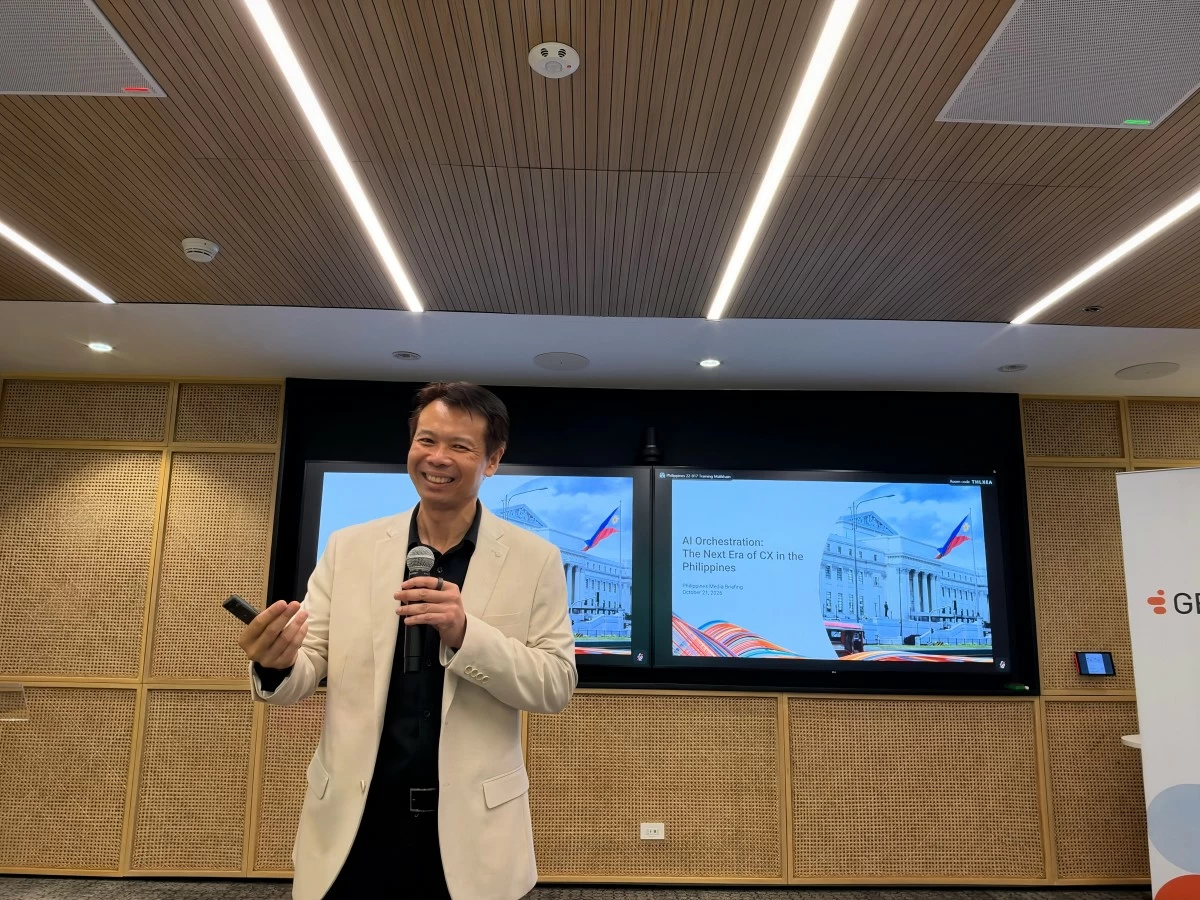
Filipino consumers are growing more comfortable with artificial intelligence in customer service, and they expect it to deliver. That is the central finding from the Philippine results of the fifth edition of Genesys’s State of Customer Experience report. The research points to rising expectations for faster, easier and more personalized service. It also shows that customer experience (CX) now strongly influences loyalty and spending across Asia Pacific (APAC). Filipinos are more positive about AI than the region and the world Nearly two-thirds of Filipino consumers (64%) say they feel more positive about AI-powered customer service than they did two years ago. The figure is 56% across APAC and 50% globally. Good experiences appear to be driving the shift. Among Filipino respondents whose views of AI improved, 35% cited positive interactions with AI-powered customer service as a reason. Bad service hits the bottom line The study underlines how much is at stake for businesses. Across APAC, 86% of consumers say poor customer service has led them to spend less or stop doing business with a brand altogether. In the Philippines, that figure rises to 91%. High expectations for AI, and a pragmatic view of who solves the problem Filipino consumers are optimistic about what AI can deliver: 84% expect AI to improve the quality and speed of customer service over the next two to three years. 82% believe AI will improve personalization. Both figures are above global averages. 78% say they do not particularly care whether a person or AI resolves their issue, as long as it is solved quickly and completely. 73% say virtual agents or chatbots have made it easier to solve issues themselves. 85% believe AI will improve personalized customer service. Personalization pays off in loyalty and revenue The findings suggest personalization is a commercial opportunity as well as a service upgrade. Filipino consumers who are assured a personalized experience every time they interact with a company say they would be very or somewhat likely to: Recommend the company: 91% Make repeat purchases: 87% Purchase additional items: 85% Pay a slightly higher price for products or services: 70% Philippine CX leaders plan to use AI to support their teams Businesses are responding. Among Philippine CX leaders, 62% plan to use AI-powered tools to assist and augment human agents, supervisors and other CX employees over the next two years. That compares with 55% of CX leaders across APAC and 47% globally, which signals stronger momentum locally for AI-supported CX teams. Spending plans match. Philippine CX leaders expect to put an average of about 32% of their customer service or experience budget toward AI-powered CX technologies over the next 12 months. Agentic AI emerges as the next step Local leaders are also looking beyond assistive tools. Nearly half (49%) expect agentic or semi-autonomous AI to increasingly orchestrate customer experiences. Of those, 37% expect autonomous AI agents to do so within three years, compared with 86% across APAC. The data points to growing interest in using AI to coordinate interactions across the customer journey. It also suggests Philippine expectations for fully autonomous orchestration remain more measured than in the wider region. The gap: connected experiences remain hard to deliver Meeting rising expectations is still difficult for many organizations. While 96% of APAC consumers say it is important for information to be remembered across channels, nearly half of organizations (46%) do not automatically pass information between virtual and human agents. Organizations also cite several top challenges that make connected experiences harder to deliver: Managing data for AI Ensuring AI readiness Building technical capabilities Keeping pace with AI innovation “Across Asia, customer expectations are evolving as AI becomes more embedded in everyday interactions,” said Mao Gen Foo, vice president, Genesys Asia. “Customers increasingly expect organizations to understand their needs, maintain context and deliver seamless, personalized experiences. For businesses, the opportunity is to move beyond isolated AI automation toward agentic orchestration - coordinating AI, people, data and systems around customer intent. By doing so, organizations can move customers from intent to outcome faster, while combining the efficiency of AI with the empathy, expertise and judgment people bring to the moments that matter most.” “Filipino consumers are becoming more open to AI, but their expectations for customer service are rising just as quickly. With poor experiences already influencing spending and loyalty, the message for businesses is clear: customer experience has a direct impact on loyalty and growth,” said Kulachart Ngernpermpoon, Genesys Country Manager for the Philippines, Thailand & Indo-China. “As AI adoption accelerates, success will depend on whether businesses can turn that investment into experiences that make a meaningful difference for Filipino customers.” Key takeaways for businesses Sentiment is improving. The Philippines shows a stronger positive shift toward AI in customer service than APAC and global averages. Personalization influences loyalty and purchasing. Tailored experiences are linked to stronger intent to recommend, repurchase and spend more. AI is for augmenting staff. More Philippine CX leaders plan to use AI to support employees than their APAC and global counterparts. Agentic AI is the next evolution of CX, with Philippine leaders anticipating a growing role in orchestrating customer experiences. AI is a rising budget priority, with a significant share of CX spending earmarked for the next 12 months. The broader shift, according to the findings, is toward agentic orchestration, where AI, employees, data and systems work together with shared context to carry customer intent through to resolution. Genesys worked with an independent research firm to survey 5,811 consumers and 1,560 CX and business leaders in more than 20 countries. The study includes responses from 1,426 consumers (24%) and 508 CX leaders (14%) across APAC, including Australia, New Zealand, India, Japan, the Philippines, Singapore, South Korea and Thailand. The survey was conducted in March and April 2026. Business respondents came from airlines, automotive, banking, government, healthcare, insurance, manufacturing, media and entertainment, professional services, retail, travel and hospitality, technology, telecommunications and utilities.
This is a summary. Read the full article at the original source.