

Former La. reporter launches sci-fi horror novel with UK publisher: 'Space is not a barrier'
A Metairie native who grew up in Baton Rouge, Brian Fontenot Jr. studied English at LSU before working as a reporter for the Tri-Parish Times, the Daily Comet and the Houma Courier. After the daily grind of parish council meetings,...
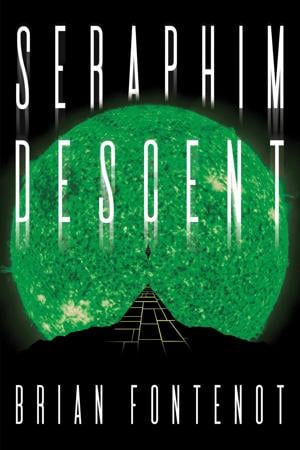
A Metairie native who grew up in Baton Rouge, Brian Fontenot Jr. studied English at LSU before working as a reporter for the Tri-Parish Times, the Daily Comet and the Houma Courier. After the daily grind of parish council meetings, fires, murders and new business openings, Fontenot pivoted to technical writing. He self-published two epic fantasy novels along the way. For his new sci-fi horror novel, "Seraphim Descent," Fontenot secured a traditional publication deal from Matthew James Publishing, the U.K.'s longest-running indie publisher. The story follows James Carter, a veteran, father and recovering alcoholic who's forced by an authoritarian government aboard a warship to investigate a green star. Joining him is a motley crew comprised of mystics, soldiers, artificial intelligences, a vampire engineer and a psychic. The book, which Fontenot describes as a combination of "Event Horizon" and "Solomon Kane," will be released Sept. 3. This interview was edited for length and clarity. When and how did you start working on "Seraphim Descent"? Ever since I was a small kid, my father and I always watched crazy sci-fi movies, all the B-movie schlock — everything from "Hell comes to Frog Town" and "Predator" to the old "Runaway" movie with Tom Selleck and "Logan's Run." He would cover my eyes when the bad scenes came on. Leading into COVID, I was work-from-home for two years (as a technical writer and editor) with Blue Cross Blue Shield, and I had just lost my father to cancer. I wasn't writing, and I was ready to give up. But I told my father before he passed that I would write another book. How was the writing process? It took on a life of its own after a rough start of doing maybe a couple hundred words a month. I wanted to write a sci-fi book, and I love horror. I wanted to mash all my influences and loves together into this compelling sci-fi epic. I'd write a scene I was excited about, and I slowly started stitching them together and sequencing them. It's about writing these images I had in my mind and filling in all the in-between stuff. It took a couple years, maybe late 2020 into early 2022. What was the publication process like? While I was writing it, I was doing freelance editing for other writers. One was a reporter buddy, Chris Scarnati. He kept encouraging me to try the small publisher route. I started going to different publishers who I thought fit the genre. It didn't take long, surprisingly, for me to get a response from Matthew James Publishing. The editor bit on it real quick. How did you fit ghosts and demons into this universe? There's a little bit of Graham Hancock influence. Hancock wrote about his experience with psychedelics. He relates DMT to shamanistic rituals and aliens. I was interested in the DMT thing. I wanted that to be a technical backdrop, where that is accepted science and a chance to plunder that realm for more information and power. The old explanation is dabbling in that realm corrupts and influences reality, and that's where you get demons and ghosts and stuff. Can you explain the physics of the warship's movement? I wanted my own scary, faster-than-light travel system, and it's loosely based on fringe physics. I combined the Dynamical Casimir Effect with the idea of constructive wave interference to allow a spacecraft to accelerate to many times the speed of light with a fraction of the required energy. The speed of light is really fast, but it's actually really slow for travel between planets. People don't consider just how vast the universe is. What do you hope readers get from this book? I really want people, even though it is a horror book, to rediscover the wonder of space. Space is not a barrier. It is a medium. I want people to imagine what's out there.
This is a summary. Read the full article at the original source.
Read full article at theadvocate