

Living wives in Christopher Nolan’s The Odyssey
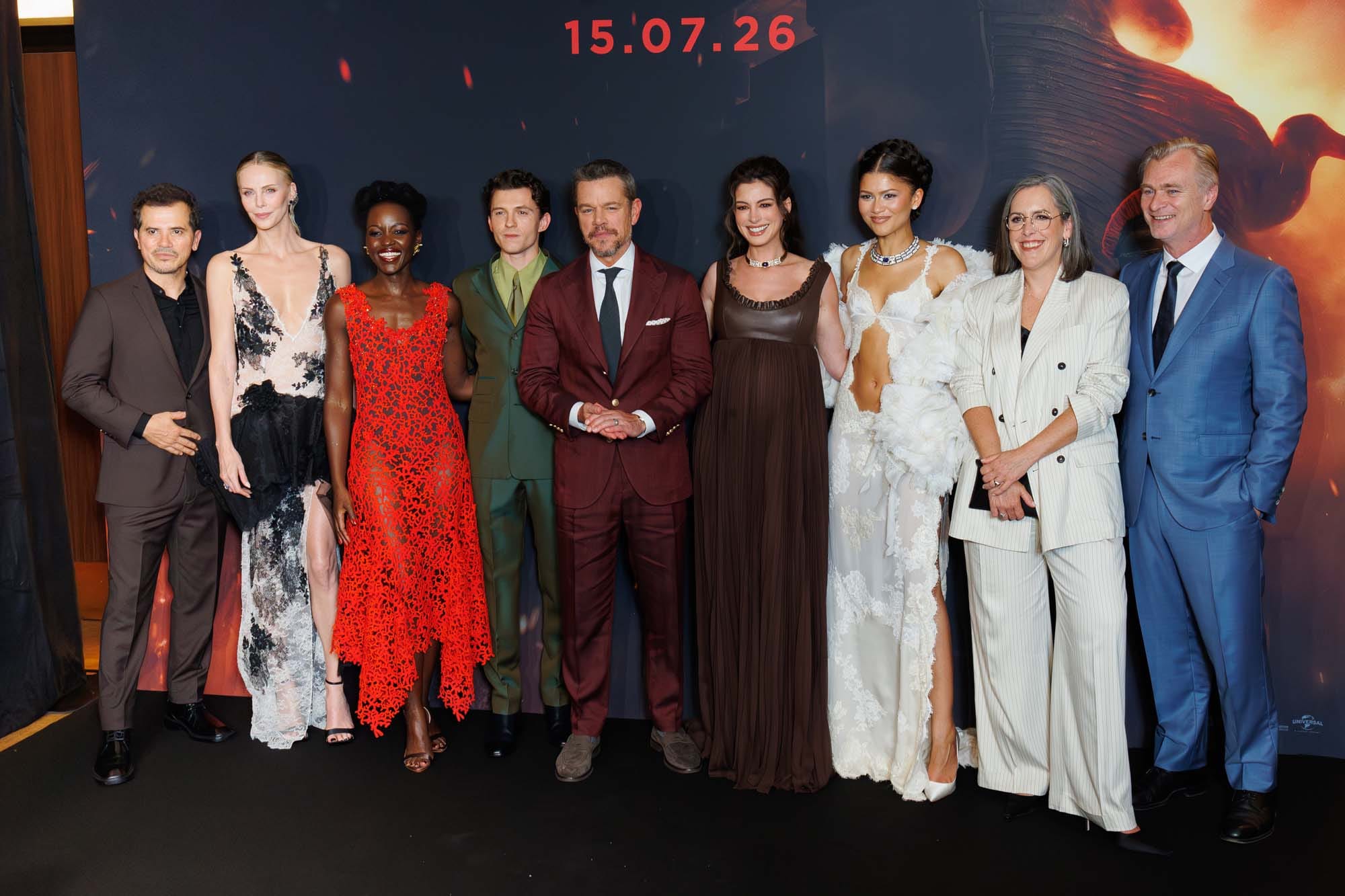
The Odyssey is trademark Christopher Nolan filmmaking, grand of scale, vast of scope, with beautiful scenery and jaw-dropping action sequences and you can truly feel his appreciation for the actors in his film
No one in modern cinema loves a dead wife more than Christopher Nolan, whose oeuvre is littered with dead women, haunting their men, sometimes literally, from the beyond. These spectral spouses—in the case of Oppenheimer, it is a dead mistress—drive Nolan’s protagonists through his timey-wimey narratives and to their epic conclusion. Nolan’s adaptation of The Odyssey , then, is a kind of rubric for Nolan’s work, for it is a film intimately concerned with living wives. Nolan’s The Odyssey is as if he flipped the mirror around and told a tale from the wife’s perspective, with her husband slipping around the edges of her story, a memory of a dream she once had, long ago. Nolan’s adaptation of The Odyssey, which he writes and directs, at once pays homage to the breadth of western narrative, connecting ancient prose poetry to modern cinema by cherry-picking vignettes from Homer’s tale and showing how one of the literally oldest stories ever told lays the foundation for so much of cinema today. Action, adventure, romance, mystery, magic, monsters, it’s all in The Odyssey , and Nolan weaves his version into a grand cinematic spectacle, full of beauty and thrills and sweeping vistas and romance and intrigue. You can see in Nolan’s adaption not only why the tale of Odysseus and his loyal wife, Penelope, has endured for so long, but how it shaped storytelling so fundamentally that it still feels exciting and modern to contemporary movie audiences. But on a more intimate scale, Nolan splits his version of The Odyssey between the roaming Odysseus (Matt Damon, at once ludicrously buff yet grizzled) and his devoted wife, Penelope (Anne Hathaway, transcendent), grounding the epic adventure in their love story. Because Christopher Nolan cannot leave a timeline alone, the film begins with Odysseus struggling to remember his past and figure out where he is and where he’s supposed to be going. The film hopscotches between scenes of the Trojan War and Odysseus’s journey to his present, confused moment. Interwoven with Odysseus’s version of events is Penelope, Queen of Ithaca, keeping the home fire burning for her absent husband who, after twenty years, everyone presumes is dead. But Penelope is smart and cunning, as wily as her husband, if with better manners. She holds a sea of suitors at bay, especially the odious Antinous (Robert Pattinson at his smarmy best), manipulating these terrible men and managing her son, Telemachus (Tom Holland, giving a career-best performance), who is tired of waiting for Odysseus to show up and goes looking for his father. Nolan’s narrative is a triptych, bouncing between father and son on their respective journeys, with Penelope holding it all together. The Odyssey is trademark Nolan filmmaking, grand of scale, vast of scope, with beautiful scenery and jaw-dropping action sequences. But he is also a great director of actors, and here you can truly feel his appreciation for actors, as he casts tremendous actors in small roles, but giving them such specific things to do that you can tell exactly why he cast each person in their respective role. Even with a dual role as sisters Helen of Troy and Clytemnestra, Lupita Nyong’o only has a few minutes screentime, but how she contrasts her performances tells us so much about each woman and their post-war life. But The Odyssey also has some of Nolan’s trademark faults, too. This is an epic poem, and he struggles to condense the story in a way that flows effectively throughout. At nearly three hours, the film doesn’t exactly feel long, but it is overstuffed and off balance, the pacing uneven, especially in the middle section. The expansiveness suits the scale of the story, I just wish it was more evenly paced for the whole three hours. And then there is the sound design, which is not as guilty of burying dialogue as previous Nolan films, but the way Ludwig Göransson’s score is mixed into diegetic noise is off-putting, at least in the beginning. It takes a minute to get used to. For those who find Nolan’s work cold, though, The Odyssey should be a breath of fresh air. Penelope and Odysseus’s longing and yearning across distance and time is palpable, he frames The Odyssey not only as a great adventure, but as a great love story, too. And a central theme in that story is the concept of “Zeus’s law” and honoring the gods, and how Odysseus and Penelope each contend with their understanding of Zeus’s law and their adherence to it, and how that impacts their relationship. The gods bring a soap operatic quality to the story, providing an extra complicating factor to Odysseus and Penelope’s tale. It’s not enough they have to contend with the hell that is other people, they also have to contend with the gods, and their actual hell. Nolan’s The Odyssey is not a perfect film but it feels perfectly Nolan, and the way he uses Penelope as a narrative anchor is especially interesting given how often he tells stories of men mourning their wives. But then, Odysseus is also a classic Nolan hero, a man haunted by his wife, trying to get back to his wife. Penelope deals with the same absence and longing, and she is also a classic Nolan protagonist, clever, resourceful, and using whatever is at her disposal to achieve her ends. And here he lets Penelope be the narrative glue, the point around which the story revolves. The Odyssey becomes a mirror reflecting aspects of Nolan’s previous work, as if Penelope is the absence haunting all his films. In The Odyssey , Christopher Nolan finally gives The Wife her due. The Odyssey is now playing exclusively in theaters.
This is a summary. Read the full article at the original source.
Read full article at laineygossip