
New lawsuit alleges Tesla’s Houston test fleet was unsafe
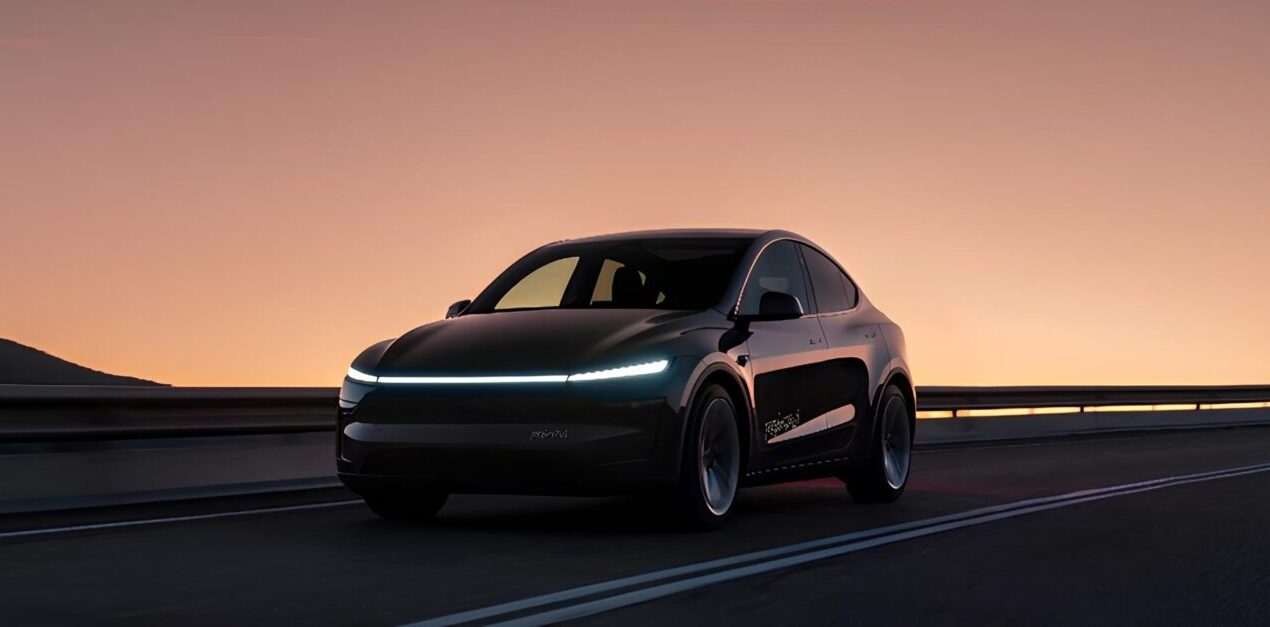
If Medrano's account holds up, Tesla's safety validation numbers may understate the severity of its deployment woes. By Stewart Burnett The post New lawsuit alleges Tesla’s Houston test fleet was unsafe appeared first on Automotive World .
A former Tesla manager, Javier Medrano, has filed a wrongful-termination lawsuit alleging that the automaker’s Houston robotaxi test fleet, the programme that laid the groundwork for commercial launch in the city, was so understaffed its vehicles became, in his words, “rolling hazards on public streets”. Medrano filed the complaint in Houston federal court himself; the complaint’s contents were first reported this week. Medrano says he became the sole operational manager of the Houston programme by mid-2024, after which Tesla roughly doubled his workload from 15 vehicles and operators to 38, spread across three round-the-clock shifts. He characterises this in the complaint as a “dangerous 38:1 operator-to-manager ratio”, far in excess of Tesla’s own “mandated 15:1 safety baseline”. The complaint also notes that other test cities had multiple safety leads while Houston had only Medrano to audit camera footage, run weekly ride-alongs and investigate incidents across a fleet running continuously. The strain, Medrano says, led directly to a “breakdown in safety oversight and extreme exhaustion”. Test drivers, for their part, worked 60–80 hour weeks and stayed on-call through weekends, while Medrano describes his own state as “trying not to lose my absolute mind, from not sleeping or eating correctly”. The situation culminated in late March: on the 21st, he sent an SOS requesting time off; on the 30th, one of the test vehicles struck a member of the public. Medrano says he was so sleep-deprived when the emergency call came in that he “processed the phone call while physically asleep” and gave apparently unsafe guidance, later reporting no recollection of the exchange. He also alleges that when he had raised staffing concerns in February, leadership responded with a performance ultimatum rather than additional hires. An HR representative reportedly told him to put his phone on “Do Not Disturb” instead of addressing the understaffing issue itself. Tesla ultimately fired Medrano on 1 May 2025, with the Autopilot director blaming him for failing to delegate tasks, and stripping a stock award that was due to vest days later. His role was then split among three people: an internal promotion plus two team leads brought in from Dallas. Medrano, representing himself and now working for a rival electric vehicle company, is seeking reinstatement, back pay and damages; Tesla has not responded to requests for comment, and the allegations remain one side of a contested, unproven case. The timing lands the lawsuit atop an already well-documented safety pattern. NHTSA data shows Tesla’s Texas robotaxis logged 22 collisions over the past year, a rate more than four times the company’s own benchmark for human drivers—and nine times the rates reported in police data. Tesla remains the only autonomous vehicle operator to habitually redact the narrative section of its crash reports, making independent verification of fault impossible. This disproportionality appears to be unique to Tesla: a report by IIHS earlier in July concluded that Waymo robotaxis are actually 68% safer than equivalent human drivers. The struggles of Tesla’s much-hyped robotaxi programme have been widely reported upon, both after its June 2025 Austin debut and in the years preceding it. A Reuters investigation earlier in 2026 documented long wait times, surface-street-only routing and thin vehicle availability across Tesla’s Texas service—patterns that Chief Executive Elon Musk himself attributed on Tesla’s Q1 earnings call directly to “rigorous validation” rather than convenience limits. While clearly an attempt to massage the narrative favourably, his comment nevertheless recasts the service’s rough edges as symptoms of a safety system straining to scale as expected. Tesla’s own disclosed numbers point the same way: rather than increasing, paid robotaxi miles actually fell by roughly 36% quarter-on-quarter in Q2—from about 1.1 million to 700,000—in spite of the service expanding to five additional cities. Musk has said broader deployment now awaits vehicle-specific driving data for the Cybercab, as well as Full Self-Driving v15 going live later in 2026 or early in 2027. Musk has also quietly replaced last year’s rather outlandish promise of coverage across half the US by the end of 2025 with something closer to a dozen states by the end of 2026. Given the automaker’s past track record, and the reality of how long it takes to actually deploy in a new city, it is unlikely that this new target will even be half-met. If Medrano’s account holds up (it should be noted that Tesla has yet to rebut or offer public comment) then it supplies the operational explanation that the crash and mileage data alone could only gesture at. A validation process this stretched, at the exact site generating the incident record underpinning Tesla’s safety claims, means those numbers may understate the underlying risk rather than simply reflect the normal growing pains of an early-stage service. Tesla is currently asking regulators to trust that its cars are capable of operating with nobody inside them whatsoever. Its purpose-built Cybercab robotaxi, already in production, eschews manual controls entirely despite a lack of regulatory support for such a vehicle, or a lack of real-world demonstration that the software is actually fit for purpose. Removing the steering wheel is a statement of confidence, but nothing in Tesla’s public record—or the scathing public comments of its former employees—suggests that confidence has been earned.
This is a summary. Read the full article at the original source.
Read full article at automotiveworld