

Sahrawi and International Experts reaffirm the Sahrawi people's permanent sovereignty over their natural resources
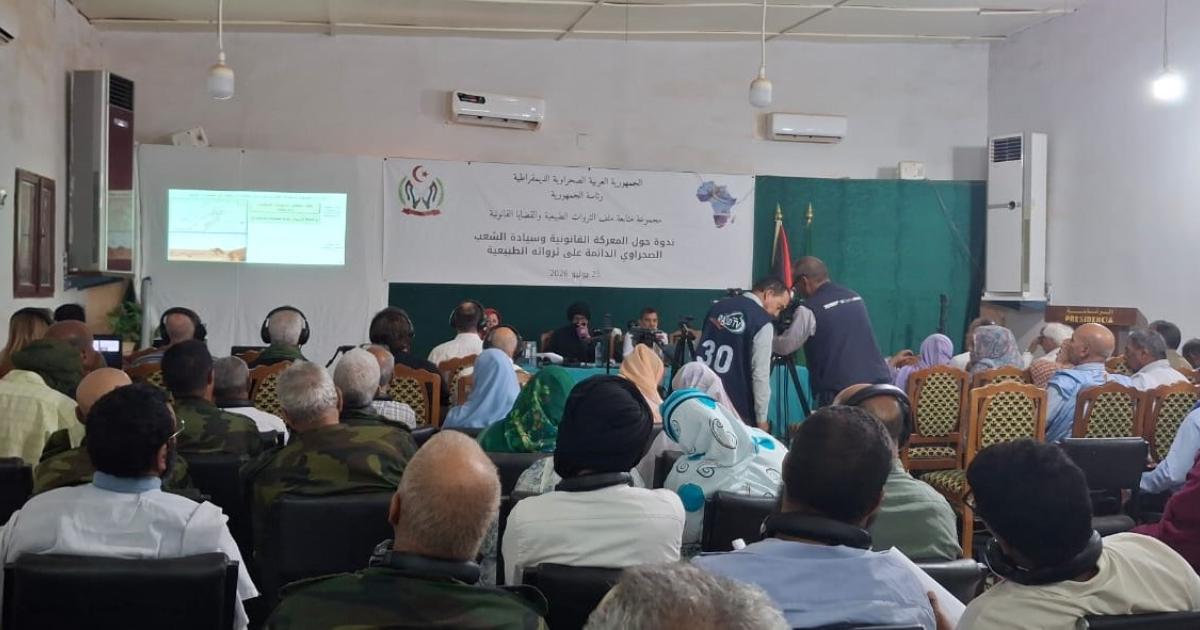
malainin lakhal 07/25/2026 - 13:13 Solidarity Chahid El Hafed (Sahrawi Refugee Camps), July 25, 2026 (SPS) – Sahrawi and international experts reaffirmed the Sahrawi people's permanent sovereignty over their natural resources and their inalienable right to self-determination and independence during a conference organized on Saturday by the Working Group on Natural Resources and Related Legal Issues at the Presidency of the Republic headquarters in Chahid El Hafed. The conference was chaired by the head of the Working Group, Amb. Oubi Bouchraya Bachir. It opened with an official address delivered by National Secretariat member Mr. Mohamed Lamine Ahmed on behalf of the President of the Republic. In his remarks, he underscored the importance of the topic, recalling the long history of foreign ambitions in Western Sahara and stressing that these ambitions target not only the Territory's natural resources but also its strategic geographic location. The conference was organized around several thematic sessions. It began with two introductory presentations addressing the technical and legal dimensions of Western Sahara's natural resources. The first presentation, focusing on the Territory's natural resource potential and technical data, was delivered by Ms. Yagouta El Mokhtar, President of the Sahrawi Observatory for Natural Resources and Environmental Protection (SONREP). The second, presented by Amb. Oubi Bouchraya Bachir, reviewed the legal proceedings concerning Western Sahara's natural resources before the European courts since 2012. The first thematic session focused on international and regional litigation concerning natural resources. Mr, Emmanuel Devers, lawyer of the Frente POLISARIO, presented an overview of the legal proceedings before the European courts and the latest developments in the case law. Amb. Malainin Lakhal, Deputy Permanent Representative of the Sahrawi Republic to Ethiopia and the African Union, examined the evolution of the Western Sahara question within the African legal framework. The second session addressed Spain's legal and criminal responsibility for the plunder of Western Sahara's natural resources. Spanish lawyer Jacinto Lara and Professor Jesús Garay delivered presentations examining Spain's responsibility, as the administering Power of Western Sahara, for European and Moroccan resource exploitation, as well as the available legal avenues for litigation and judicial accountability. The third session focused on monitoring and documentation mechanisms. Anselmo Farina, Expert in tracking and documenting the plunder of natural resources, presented methods for monitoring and data collection. Mahfoud Bachri and Albert Giralt delivered a joint presentation on the role of civil society in documenting and monitoring the exploitation of natural resources, while Flora Marrero Ramírez, a member of the International Association of Jurists for Western Sahara (IAJUWS), also addressed the session. The fourth and final session examined the relationship between the exploitation of natural resources and war crimes. Former Member of the European Parliament and political and human rights activist Miguel Urbán focused on territorial sovereignty and the legal and economic dimensions of natural resource exploitation, highlighting how such activities contribute to consolidating the occupation and facilitating the unlawful exploitation of the Territory. He also stressed that both natural and legal persons bear responsibility for any activities carried out in the occupied territories, as such activities contribute, directly or indirectly, to sustaining the occupation. For his part, Sahrawi expert Gaithi Annah presented a paper on Moroccan war crimes in Western Sahara and mechanisms for documenting them. He shared documented evidence of crimes committed by the Moroccan army against Sahrawi and non-Sahrawi civilians, including victims of armed drones and landmines, while emphasizing the grave humanitarian consequences and lasting impact of the Moroccan Wall of Shame. Among its objectives, the conference sought to present the principal files and legal work undertaken by the Working Group on Natural Resources and Related Legal Issues, while also providing an opportunity for the international experts cooperating with the Group to present the findings of their work and discuss them with Sahrawi stakeholders in particular. The Working Group had previously held two meetings on Thursday and Friday to review the main files related to Western Sahara's natural resources, assess its activities over the past year, and define the main priorities for its second year of work. The meetings also included consultations with Sahrawi and international experts to discuss future avenues for cooperation and action. (SPS) 090/00/60 (SPS)
Chahid El Hafed (Sahrawi Refugee Camps), July 25, 2026 (SPS) – Sahrawi and international experts reaffirmed the Sahrawi people's permanent sovereignty over their natural resources and their inalienable right to self-determination and independence during a conference organized on Saturday by the Working Group on Natural Resources and Related Legal Issues at the Presidency of the Republic headquarters in Chahid El Hafed. The conference was chaired by the head of the Working Group, Amb. Oubi Bouchraya Bachir. It opened with an official address delivered by National Secretariat member Mr. Mohamed Lamine Ahmed on behalf of the President of the Republic. In his remarks, he underscored the importance of the topic, recalling the long history of foreign ambitions in Western Sahara and stressing that these ambitions target not only the Territory's natural resources but also its strategic geographic location. The conference was organized around several thematic sessions. It began with two introductory presentations addressing the technical and legal dimensions of Western Sahara's natural resources. The first presentation, focusing on the Territory's natural resource potential and technical data, was delivered by Ms. Yagouta El Mokhtar, President of the Sahrawi Observatory for Natural Resources and Environmental Protection (SONREP). The second, presented by Amb. Oubi Bouchraya Bachir, reviewed the legal proceedings concerning Western Sahara's natural resources before the European courts since 2012. The first thematic session focused on international and regional litigation concerning natural resources. Mr, Emmanuel Devers, lawyer of the Frente POLISARIO, presented an overview of the legal proceedings before the European courts and the latest developments in the case law. Amb. Malainin Lakhal, Deputy Permanent Representative of the Sahrawi Republic to Ethiopia and the African Union, examined the evolution of the Western Sahara question within the African legal framework. The second session addressed Spain's legal and criminal responsibility for the plunder of Western Sahara's natural resources. Spanish lawyer Jacinto Lara and Professor Jesús Garay delivered presentations examining Spain's responsibility, as the administering Power of Western Sahara, for European and Moroccan resource exploitation, as well as the available legal avenues for litigation and judicial accountability. The third session focused on monitoring and documentation mechanisms. Anselmo Farina, Expert in tracking and documenting the plunder of natural resources, presented methods for monitoring and data collection. Mahfoud Bachri and Albert Giralt delivered a joint presentation on the role of civil society in documenting and monitoring the exploitation of natural resources, while Flora Marrero Ramírez, a member of the International Association of Jurists for Western Sahara (IAJUWS), also addressed the session. The fourth and final session examined the relationship between the exploitation of natural resources and war crimes. Former Member of the European Parliament and political and human rights activist Miguel Urbán focused on territorial sovereignty and the legal and economic dimensions of natural resource exploitation, highlighting how such activities contribute to consolidating the occupation and facilitating the unlawful exploitation of the Territory. He also stressed that both natural and legal persons bear responsibility for any activities carried out in the occupied territories, as such activities contribute, directly or indirectly, to sustaining the occupation. For his part, Sahrawi expert Gaithi Annah presented a paper on Moroccan war crimes in Western Sahara and mechanisms for documenting them. He shared documented evidence of crimes committed by the Moroccan army against Sahrawi and non-Sahrawi civilians, including victims of armed drones and landmines, while emphasizing the grave humanitarian consequences and lasting impact of the Moroccan Wall of Shame. Among its objectives, the conference sought to present the principal files and legal work undertaken by the Working Group on Natural Resources and Related Legal Issues, while also providing an opportunity for the international experts cooperating with the Group to present the findings of their work and discuss them with Sahrawi stakeholders in particular. The Working Group had previously held two meetings on Thursday and Friday to review the main files related to Western Sahara's natural resources, assess its activities over the past year, and define the main priorities for its second year of work. The meetings also included consultations with Sahrawi and international experts to discuss future avenues for cooperation and action. (SPS) 090/00/60 (SPS)
This is a summary. Read the full article at the original source.
Read full article at spsrasd_info