

Viral ‘Beijing hit list’ targeting prominent Tibetans likely ‘fake’
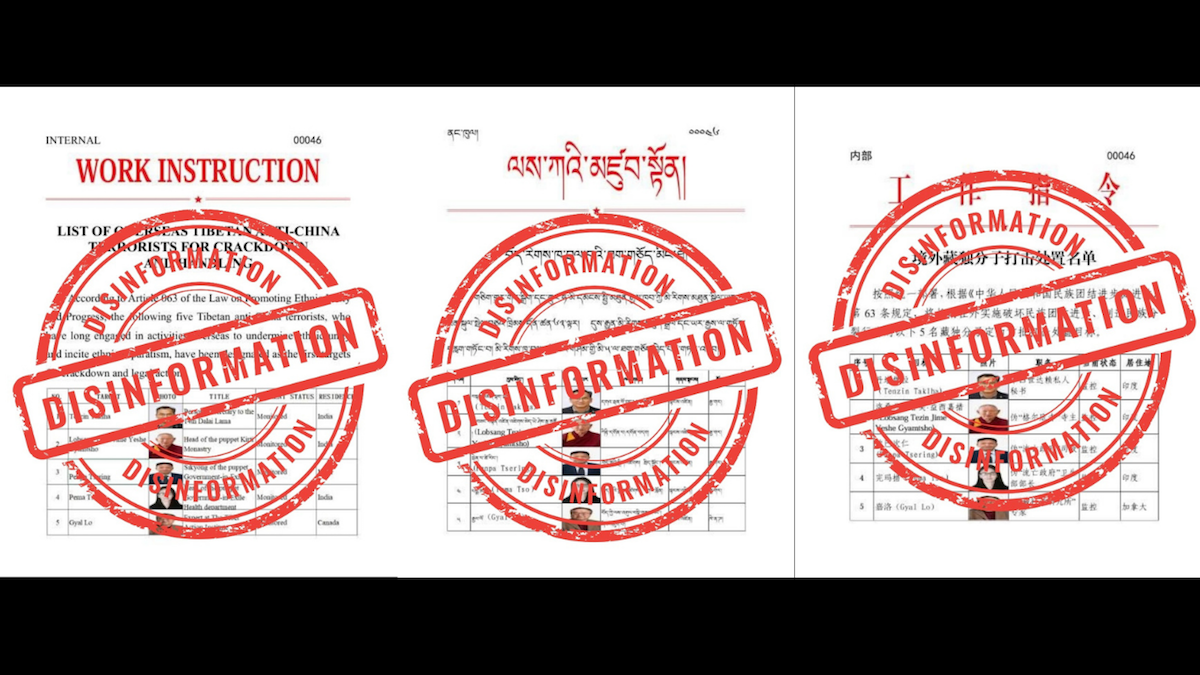
Tenzin Nyidon DHARAMSHALA, July 31: A document circulating widely on social media, purportedly a confidential Chinese government directive ordering the surveillance of prominent Tibetans living overseas under China’s newly enacted so-called Law on Promoting Ethnic Unity and Progress, is exhibiting numerous indicators that call its authenticity into serious question. The document, promoted online as a secret [...] The post Viral ‘Beijing hit list’ targeting prominent Tibetans likely ‘fake’ appeared first on Phayul .
Tenzin Nyidon DHARAMSHALA, July 31: A document circulating widely on social media, purportedly a confidential Chinese government directive ordering the surveillance of prominent Tibetans living overseas under China’s newly enacted so-called Law on Promoting Ethnic Unity and Progress , is exhibiting numerous indicators that call its authenticity into serious question. The document, promoted online as a secret “Beijing hit list” or “target list,” claims Chinese authorities have instructed officials to monitor prominent Tibetan figures abroad. According to the document, those purportedly listed include Central Tibetan Administration (CTA) President Penpa Tsering; Tenzin Taklha, long-time aide to His Holiness the 14th Dalai Lama; 11th Kirti Rinpoche Lobsang Tenzin Jigme Yeshe Gyamtso Rinpoche of Kirti Monastery; CTA Health Minister Pema Tso; and Tibetan educational sociologist Dr. Gyal Lo, who is widely known for exposing China’s state-run boarding school system in Tibet. However, despite naming several prominent Tibetans, the document lacks virtually every defining characteristic of an authentic Chinese government directive. Among the most conspicuous irregularities is the absence of an issuing government agency, an official document reference number, a date of issuance, an official seal, an approving authority, and an authorized signature. It also lacks a designated recipient, implementation instructions, or an identifiable administrative chain of command—elements standard in formal Chinese government communications. Equally significant is the absence of an original, verifiable source. No official PDF, archival record, or independently authenticated version of the document has surfaced, making it impossible to establish its provenance. The multilingual versions of the document also contain notable inconsistencies that undermine its credibility. In the Chinese text, the phrase used is “overseas Tibetan separatist elements,” whereas the accompanying English translation renders it as “Tibetan anti-China terrorists.” The term “terrorists” does not appear in the original Chinese wording, representing a substantial departure in meaning rather than a straightforward translation. The document also employs an incorrect Chinese rendering of the name of CTA President Penpa Tsering, differing from the standardized form consistently used in official Chinese government publications. Such an error would be highly unusual in an authentic state-issued document referencing a well-known public figure. Taken together, these linguistic inconsistencies raise additional questions about whether the document originated from an official Chinese government source. The circulation of seemingly official documents to amplify politically sensitive narratives is not unprecedented. In 2026, the exile Tibetan government known, officially as the Central Tibetan Administration (CTA), warned the public about a forged document bearing the official letterhead of the Office of His Holiness the Dalai Lama. The fabricated document was circulated on Facebook to disseminate false information while mimicking the appearance of an authentic government communication. The post Viral ‘Beijing hit list’ targeting prominent Tibetans likely ‘fake’ appeared first on Phayul .
This is a summary. Read the full article at the original source.
Read full article at phayul