

What's next for homegrown London as Michelin retires its Green Star?
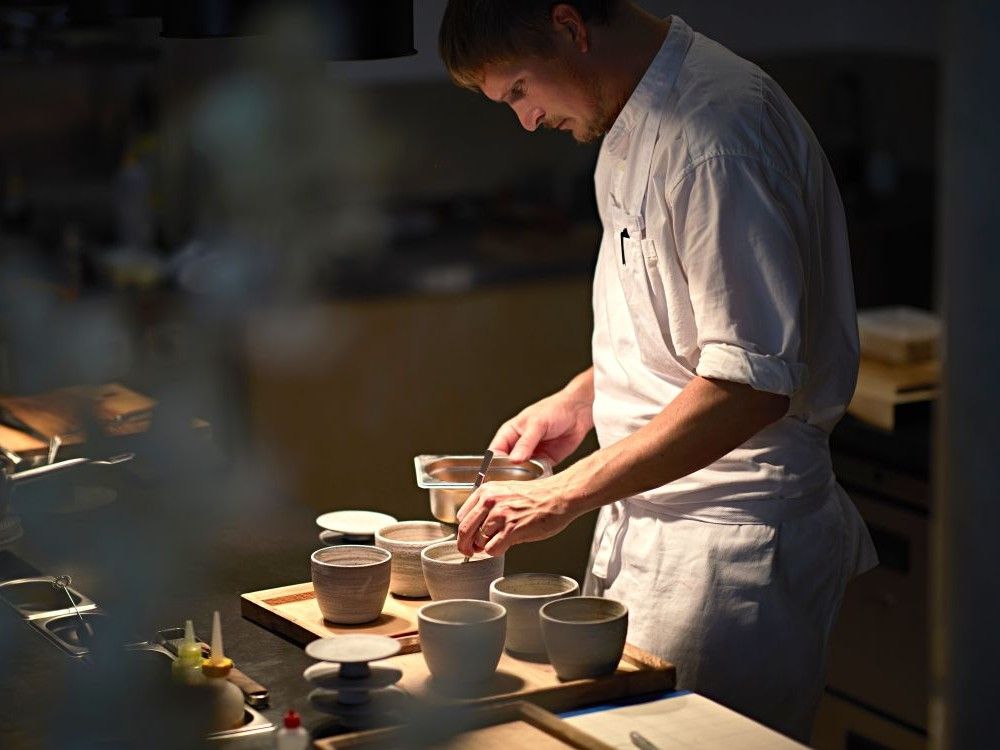
The restaurant guide is bidding its sustainability award adieu, but U.K. restaurants remain rooted in the cause
Article content Reviews and recommendations are unbiased and products are independently selected. Postmedia may earn an affiliate commission from purchases made through links on this page. Well, I certainly didn’t see scrabbling on my hands and knees for gnarly cow horns packed with manure and buried underground as part of my discovery of London’s greenest restaurants. Yet here I am under a mizzly spring sky, soil caking my hands at Heckfield Home Farm in Hampshire, just outside of the capital. With its celebrated biodynamic grower Jane Scotter and calendula flowers for company, I’m not only unearthing a now-sweet-smelling natural preparation to boost produce (its abundance is funnelled into luxury hotel Heckfield Place, a short stroll away) but also the lengths it takes to create flavourful food. “Everything starts with the soil,” Scotter explains, on one of her many tours of the market garden, hugged by dog rose and elder trees, and polytunnels rich in Berner Rose tomatoes and Barbarella eggplants. “It’s about growing with intention.” With an elegant Arabescato Corchia marble bar and artisanal trestle tables, Heckfield’s Marle restaurant (the name riffs on the old English word for a soil type) is now part of a catch-it-while-you-can-rare breed: It was awarded a Michelin Green Star in 2022 for sustainable gastronomy. But the upper-echelon restaurant guide is removing the newish accolade from its repertoire at the end of 2026. Currently held by some 300 restaurants globally, the Green Star is being replaced with a Mindful Voices initiative focused on people not places. “Seeing the first shoots come through on the farm is a welcome reminder that every dish begins long before it reaches the table,” enthuses Eleanor Henson, Heckfield’s culinary director, as we peer over the rest of the 438-acre estate’s arboretum, Cedar of Lebanon trees and lakes. With every bite of labneh-dipped homegrown radishes and nettle risotto with ricotta fresh from its Guernsey cows, I agree with her sentiment: “Food is one of the most direct ways to understand a place and experience the landscape in an immediate way.” As I journey by train the next day into the city, the landscape becomes more concrete than Heckfield’s Arcadian setting, but the suburb of Richmond still offers a bucolic entry into London’s reputation as a zero-waste, eco-centric hub. Complete with cows and horses in neighbouring fields, a narrow path leads to another Green Star oasis: Petersham Nurseries. I’m following in the footsteps of the late chef Skye Gyngell, who died last year; the sustainability pioneer (also Henson’s predecessor) helped establish this restaurant, too, winning it a Michelin Star during her reign more than a decade ago. Inside the magical greenhouse setting — fragrant with jasmine and bougainvillea — we sit next to lush vines entwining any place its tendrils can grab. Set within the grounds of Petersham House, the handsome Queen Anne redbrick family home of the original owners, wild garlic curry and seasonal friggitelli peppers from the nearby kitchen garden soon arrive. Regarded as an institution (thriving on a “holistic approach,” according to managing director Lara Boglione), it’s sprouted from serving 30 people daily in Gyngell’s era to 300 today — still from the tiny kitchen she used to call “a garage.” As the godmother of turning kitchens into single-use plastic-free zones, her legacy also brings me to Spring, a restaurant decorated with exquisite blossoms on the walls in the heart of theatreland. (It also has the same owners as Heckfield.) Well known for ditching some 4,000 kilometres of Saran Wrap used by its chefs every year, it’s anchored in the 18th-century neoclassical Somerset House, beside Waterloo Bridge and a peek away from the Houses of Parliament. “Kitchens keep you very in the moment,” Henson enthuses as she peers over a fresh shipment for her next service: from artichokes and borlotti beans to white asparagus and zucchini flowers. Her team will also candy some rose petals, turn cilantro and elderflower into ice cream, and create a lemon verbena ice milk. I wind my way up through the crowds of Covent Garden and Regent Street to upscale Mayfair, which feels a world away from my earlier hands-in-the-soil moment. The enclave bursts with high-octane shopping from South Molton to Duke streets along with the capital’s most exclusive and exciting hotel launch: The Chancery Rosewood. The stunning restoration of the former U.S. Embassy boasts the iconic golden eagle sculpted by Theodore Roszak, which soars down on Grosvenor Square and behind which is its achingly stylish rooftop bar. Around the corner, Chantelle Nicholson — chef-owner at Apricity Restaurant (clearly there’s a green-star theme: it’s an ancient word for the warmth of the winter sun) — continues to herald food grown by “exceptional people” as locally as possible. The butterhead lettuce I tuck into is grown vertically a few clicks away in south London, as is its shiitake and black pearl mushrooms. “Dining in a restaurant that is genuinely rooted in where its food comes from gives you a window into something authentic,” Nicholson explains, as we sit by pared-back walls that reveal centuries of historic painting. “In a neighbourhood like Mayfair, where luxury can sometimes feel quite disconnected from the natural world, I think that contrast is particularly powerful.” London, put simply, “is one of the greatest food cities in the world.” (Testament to its longevity is the nearby much-loved Soho restaurant haunt Quo Vadis, which celebrates its centenary this year.) I go east for my last morsels: Restaurant St. Barts, London’s only spot with bragging rights for both Michelin and Green stars. With its Scandi-inspired pre-dining area complete with sheepskin rugs, it sits in a serene hidden pocket looking out onto the cloisters of a 900-year-old church (the oldest parish in London, it’s also a famed film location for Four Weddings and a Funeral) in this financial district known as the City of London or “Square Mile.“ Much quieter on a Saturday without its typical workers, its neighbours include skyscrapers affectionately named the Gherkin, the Cheesegrater and the Walkie Talkie, the feted Smithfield meat market and walls built by the Romans some 2,000 years ago. “I love that it’s the backdrop for our restaurant that tries to tell the story of what is on offer across the U.K.,” explains executive chef Johnnie Crowe, who only uses ingredients from this island: from lobster and skate off the Cornish coast to cobnuts (Britain’s hazelnut) and quail from rural Suffolk. So, without a whiff of cocoa in his open kitchen, for instance, he inventively calls on fermenting black koji and barley to create his you’d-never-know-it-isn’t-chocolate dessert. “The project and the goals we had to begin,” Crowe adds about pursuing sustainability before Michelin came knocking, “will always be the same.” These stars will soon fade (and perhaps this article become somewhat of an obituary), but the provenance of food only seems to be gaining strength in London. Many chefs amplify the importance of sourcing, their growers’ grit and the push against waste — all frequently sought by conscious travellers who want to tuck into myriad tastes of the British Isles, to boot. “We were never doing this for the star,” Nicholson concludes, echoing her peers’ comments on the removal. “It’s simply how we operate.” If you go Apricity Restauant: With its acoustic panels created from mycelium, everything about this restaurant feels natural. It’s all about “joy, rejuvenation and regeneration” opines chef-owner Chantelle Nicholson. Restaurant St. Barts: Saturday service is a more leisurely affair, but if you’re in a hurry the office-worker-style business lunch weekday is fabulous and speedier, too. Heckfield Place: An hour from central London, this hotel and its restaurants (Marle and Hearth) are perfect for a countryside retreat. Petersham Nurseries: An unmissable haven, which also boasts a well-heeled garden centre and afternoon tea spot. The original owners’ son now runs a farm, which provides much of its delicious organic ingredients. Spring: Request one of its beautifully cavernous bay window seats (it will not disappoint) and have a swig of its home-made fig leaf liqueur and limoncello. Quo Vadis: Helmed by chef Jeremy Lee (possibly the most exuberant chef in London), this legendary restaurant has an honourable mention as one of London’s centenary clubs (the oldest, Rules, is from 1798). Bringing in biodynamic produce from Fern Verrow (Jane Scotter’s equally feted farm in Hereford, which also serves Spring), do not leave without trying his smoked eel sandwich or pie of the day. The Chancery Rosewood: Along with a well-curated collection of contemporary and mid-century artists, food dominates at this hotel with its five restaurants, notably Jacqueline (a nod to Jackie Kennedy), which serves afternoon tea with perfumed patisserie such as orange blossom. If you’re in the market for the more expensive rooms, expect the most attentive butler service (I mentioned liking Oolong tea, and found it ready for me when I returned from the pool an hour later...) Lucy Hyslop was a guest of The Chancery Rosewood and the restaurants, none of which previewed this story before publication.
This is a summary. Read the full article at the original source.
Read full article at o_canada